


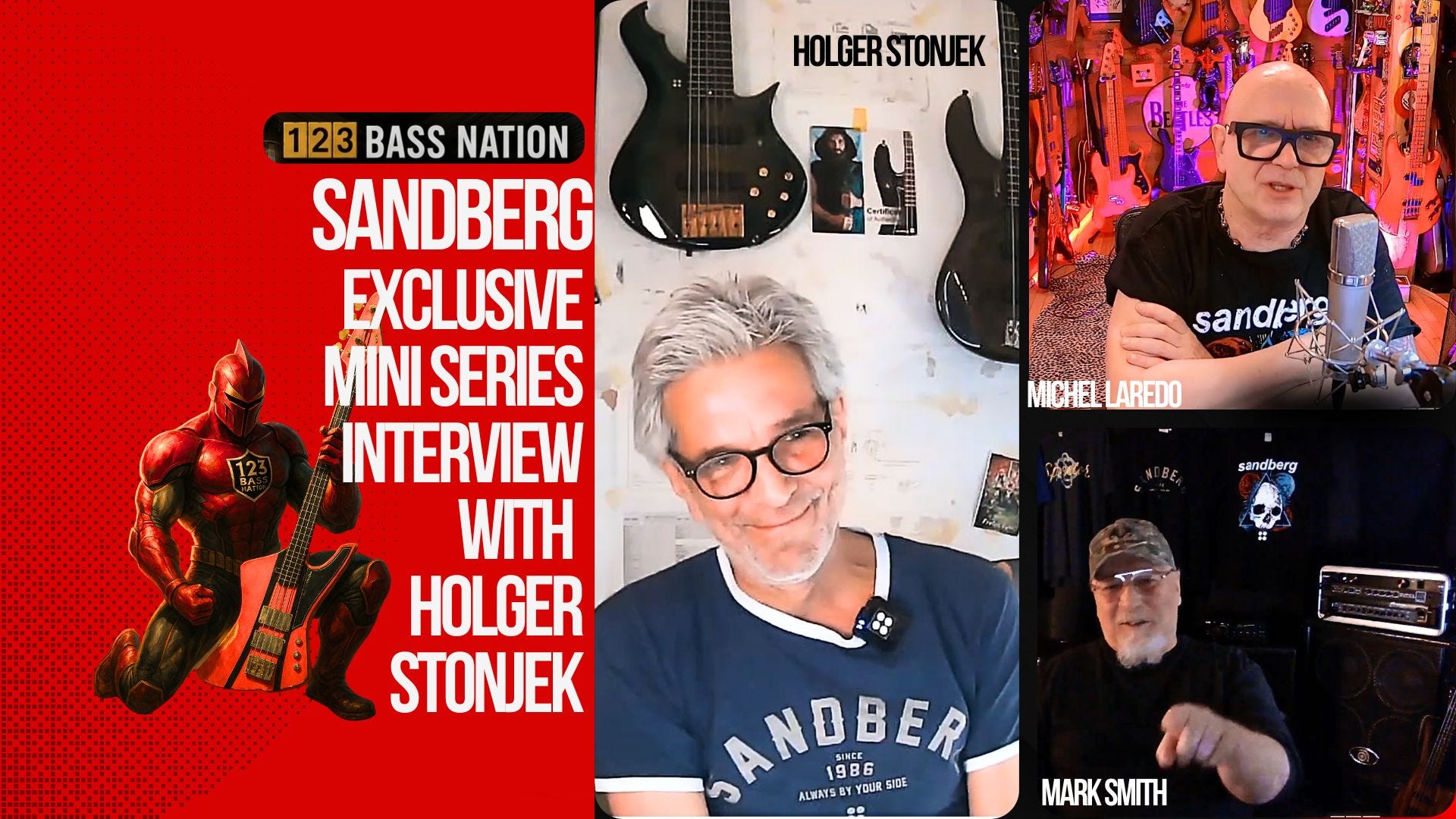
The Beginning: Germany, Craftsmanship, and the Refusal to Follow Trend
In the world of bass guitars, there are companies that follow trends…


…and then there are companies that quietly build their own universe.
Sandberg Guitars belongs firmly in that second category.
What makes Sandberg special is not simply that they build high-quality instruments. Plenty of companies do that.
What makes Sandberg important is that they found a way to combine:
vintage soul,
modern engineering,
player-focused customization,
boutique craftsmanship,
and real-world reliability
without losing personality in the process.
That balance is incredibly difficult to achieve.
Too modern, and instruments can feel cold.
Too vintage, and they can feel limited.
Too boutique, and they become inaccessible museum pieces.
Too corporate, and they lose character.
Sandberg somehow found the middle ground.
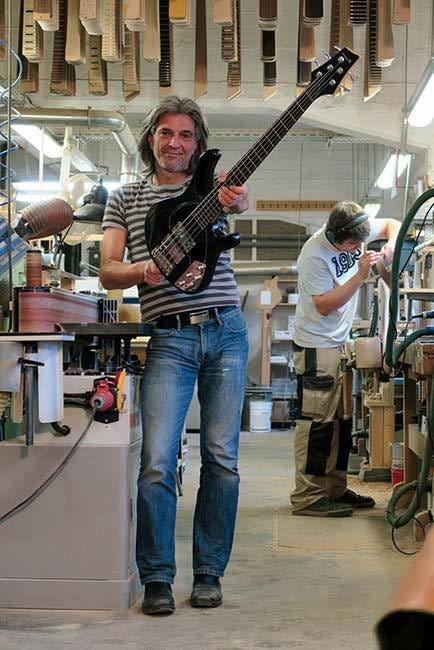
The story begins in Germany with Holger Stonjek and his vision for building instruments that working musicians actually needed.
During the 1980s and early 1990s, the bass world was changing rapidly. Players were demanding more versatility, better electronics, improved playability, stronger construction, and modern reliability for increasingly professional touring situations.
At the same time, many musicians still loved the emotional feel of classic vintage basses.
That tension created a massive opportunity.
Instead of copying the past exactly or abandoning it completely, Sandberg decided to evolve it.
That philosophy became the foundation of the company.
The earliest Sandberg instruments immediately stood out because they didn’t feel trapped in one era. They respected traditional bass design while introducing modern solutions that real musicians appreciated instantly.
And importantly…
they were built by people who clearly understood bass players.
Not marketing departments.
Not trend analysts.
Bass players.
That authenticity would become one of the company’s greatest strengths for decades to come.
Part 2 — The Rise of the Sandberg Identity


As Sandberg grew internationally, the company developed a recognizable identity that separated it from nearly everyone else in the industry.
Their instruments looked familiar…
…but also unmistakably different.
That’s harder than it sounds.
Many builders either become direct copies of vintage American instruments or move so far into futuristic design that they alienate traditional players.
Sandberg managed to live between those worlds.
Their famous California Series became one of the clearest examples of that philosophy.
At first glance, players recognized classic inspirations:
P-style basses
J-style basses
familiar body shapes
traditional ergonomics
But once musicians actually picked them up, the differences became obvious immediately.
The necks felt faster.
The balance felt better.
The electronics were more flexible.
The craftsmanship felt ultra-precise.
The instruments sounded modern without losing warmth.
And perhaps most importantly:
They felt alive.
Sandberg instruments developed a reputation for combining studio-level articulation with aggressive live performance capability. They could move from funk to rock, metal to fusion, vintage soul to modern progressive music without fighting the player.
That flexibility helped the company explode among professional touring musicians.
Then came another important element of the Sandberg identity:
The aged finishes.
Long before relic-style instruments became completely mainstream, Sandberg began developing beautifully worn instruments that looked naturally played instead of artificially destroyed.
Their “hardcore aged” approach became hugely respected because the instruments felt authentic rather than gimmicky.
The finishes carried personality.
Every scratch, fade, worn edge, and weathered detail gave the instruments character — like tools that already had stories attached to them.
That emotional connection mattered deeply to musicians.
Because great instruments are not just pieces of wood and electronics.
They become companions.
Part 3 — Artists, Global Recognition, and the Modern Sandberg Family


As the company expanded internationally, Sandberg began attracting an incredibly diverse roster of players.
And this is where the company’s true versatility became undeniable.
Unlike brands locked into one musical genre, Sandberg instruments started appearing everywhere:
funk,
metal,
progressive rock,
fusion,
pop,
session work,
industrial music,
gospel,
touring productions,
modern online bass culture.
Artists like Ida Nielsen helped bring Sandberg into the modern funk spotlight with explosive slap technique, vibrant stage energy, and highly customized signature instruments.
At the opposite end of the musical spectrum, Oliver Riedel brought Sandberg into massive industrial metal stadium environments where precision, durability, and crushing low-end authority were essential.
That contrast says everything about the company.
One bassist represents color, funk, virtuosity, and movement.
The other represents atmosphere, industrial heaviness, and sonic architecture.
Both fit Sandberg perfectly.
That’s rare.
The company also became increasingly respected among session musicians because of how adaptable the instruments were in professional recording situations. Engineers appreciated the clarity. Producers appreciated the consistency. Players appreciated the comfort and reliability.
And unlike many boutique companies that remain inaccessible to average musicians, Sandberg maintained a balance between exclusivity and usability.
Their instruments felt premium…
but built to work.
Not just hang on walls.
Part 4 — The Sandberg Philosophy: Why Players Connect Emotionally
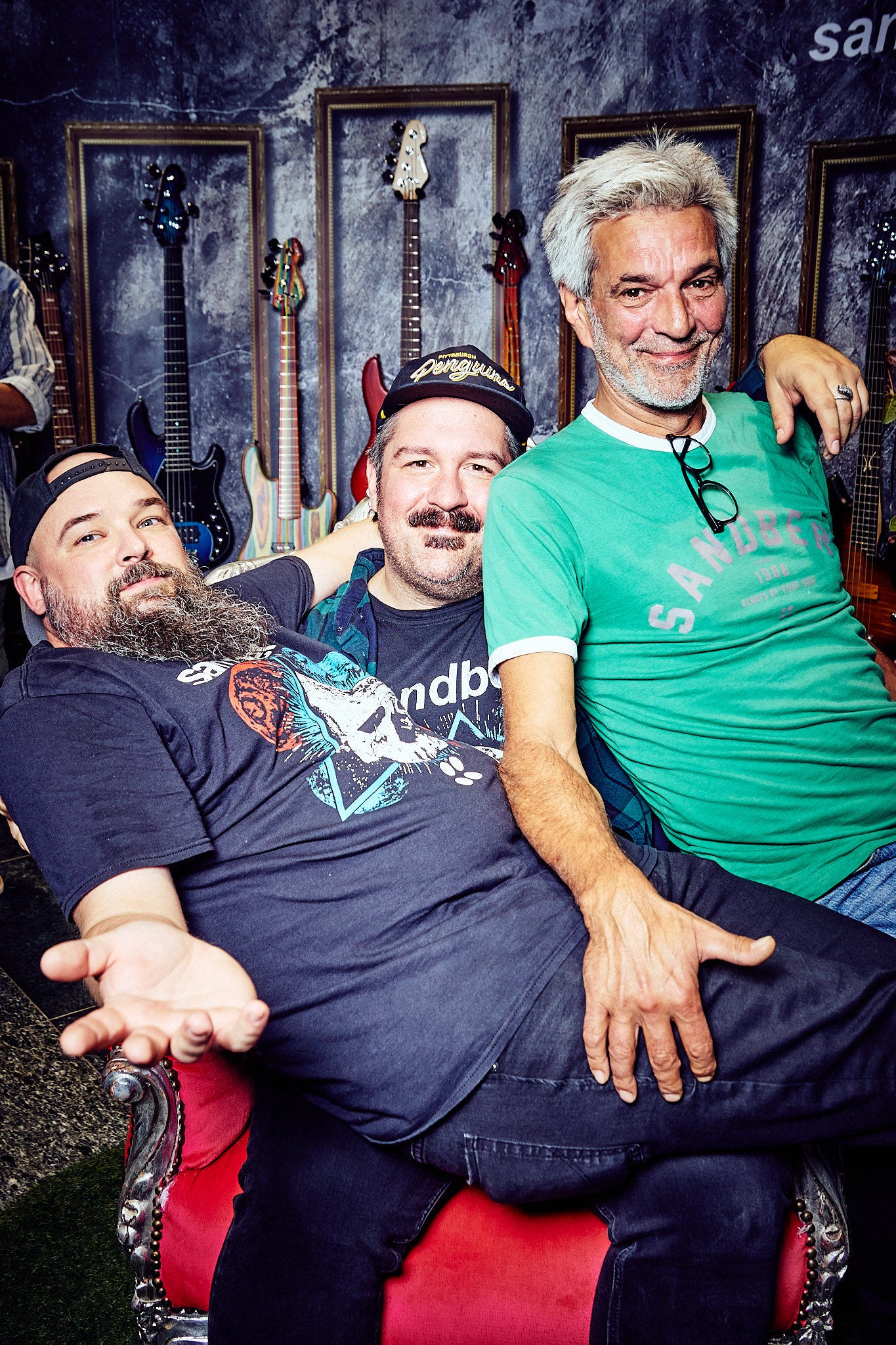
One of the reasons musicians become emotionally attached to Sandberg instruments is because the company never feels disconnected from players.
There’s a human quality behind the brand.
That becomes especially clear when listening to Holger Stonjek speak about instruments, design, musicians, and creativity.
Sandberg does not approach bass building like mass manufacturing.
They approach it like relationship-building.
Every neck carve, pickup configuration, aging treatment, electronic option, and setup decision feels driven by the question:
“How will this help the musician express themselves?”
That mindset shaped the entire company culture.
Their instruments are known for:
exceptional neck comfort,
low-action playability,
highly musical active electronics,
precision German construction,
lightweight body balance,
custom flexibility,
and real-world stage reliability.
But beneath all of those technical features sits something deeper:
Identity.
Players often describe finding “their” Sandberg.
Not just owning one.
Finding one.
That emotional language appears constantly around the brand because the instruments feel personal rather than generic.
And in today’s music industry — where so much gear feels mass-produced and disposable — that feeling becomes incredibly powerful.
Part 5 — Why Sandberg Matters in Modern Bass History
Today, Sandberg Guitars stands as one of the most respected modern bass companies in the world.
Not because they chased hype.
Not because they copied vintage nostalgia endlessly.
And not because they tried to reinvent the bass into something unrecognizable.
They succeeded because they evolved tradition intelligently.
They listened to musicians.
They respected craftsmanship.
They embraced individuality.
And they built instruments designed for real artistic lives.
That philosophy allowed Sandberg to become something much bigger than a boutique German company.
They became part of modern bass culture itself.
You now see Sandberg instruments:
on massive festival stages,
in stadium productions,
inside recording studios,
across YouTube bass communities,
in funk bands,
progressive bands,
metal bands,
worship bands,
solo artist performances,
and professional touring rigs around the world.
And somehow, despite all of that growth…
they still feel personal.
That may be Sandberg’s greatest achievement of all.
Because in an industry where many companies become larger and lose their soul, Sandberg managed to expand globally while still feeling like a company built by musicians for musicians.
And that’s exactly why so many players don’t just respect Sandberg.
They genuinely love them.
Top of Form